Construction and Validation of a Clinical Model to Predict Lymph Node Metastasis in Early Hypopharyngeal Squamous Cell Carcinoma
DOI:
https://doi.org/10.71321/ggvee953Keywords:
Metastasis, Hypopharyngeal, SEER, Nomogram, PrognosisAbstract
Background: Hypopharyngeal squamous cell carcinoma (HSCC) is the most frequent histologic subtype of hypopharyngeal carcinoma and has a poor prognosis. With the development of upper gastrointestinal endoscopy, an increasing number of early HSCC cases can be diagnosed and treated by endoscopic mucosal resection (EMR) and endoscopic submucosal dissection (ESD). However, clinicians lack an effective tool to predict lymph node metastasis (LNM) of early HSCC.
Methods: A total of 410 early HSCC cases were extracted from the Surveillance, Epidemiology, and End Results (SEER) database. Clinical data (50 early HSCC patients) from our hospital were applied for external validation. Univariate and multivariate logistic regression analyses to filter the risk factors were performed. A nomogram model was built to predict LNM in early HSCC patients according to the multivariate logistic regression model.
Results: HSCC patients with lymph node metastasis had worse overall survival rates and a higher risk of long-term mortality (P =0.016). The C-index and AUC of our predictive nomogram model were 0.674 and 0.623-0.726, respectively. The AUC, sensitivity, specificity, PPV, and NPV were 0.680 (95% CI: 0.525-0.835), 80.0%, 46.7%, 50.0%, and 77.8%, respectively, for the validation set.
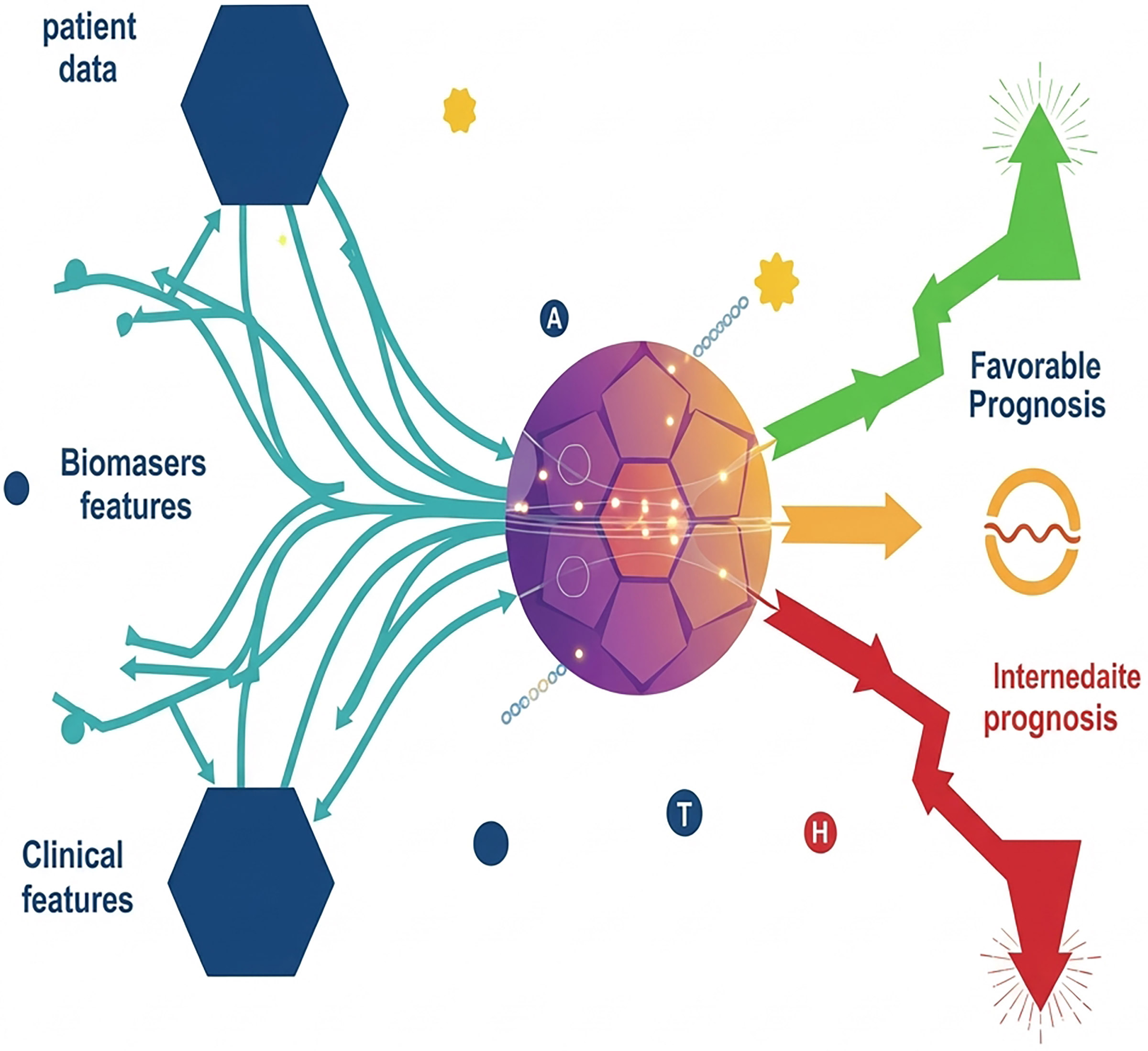
Conclusion: Our study resulted in a novel nomogram model for predicting LNM that can be a promising tool for assessing the feasibility of EMR/ESD in early HSCC.
Impact: Our study provides a novel method for HSCC preoperative assessment before ESD.
References
[1] Jay SC, Kim P, Katherine M, Henry TH, Randal SW, Kian KA, et al. National Cancer Database report on cancer of the head and neck: 10-year update. (2009). Head Neck, 31(6), 748-58. https://doi.org/10.1002/hed.21022
[2] Echanique KA, Evans LK, Han AY, Chhetri DK, St John MA. Cancer of the Larynx and Hypopharynx. (2021). Hematol Oncol Clin North Am, 35(5), 933-947. https://doi.org/10.1016/j.hoc.2021.05.005.
[3] Meng Z, Zhang L, Huang C, Piao Y, Chen X, & Xian J. Quantitative parameters derived from 18F-fluorodeoxyglucose positron emission tomography/magnetic resonance imaging can accurately estimate the histologic grade of hypopharyngeal squamous cell carcinoma preoperatively. (2022). Neuroradiology, 64(11), 2153-2162. https://doi.org/10.1007/s00234-022-03052-2.
[4] Petersen JF, Timmermans AJ, van Dijk BAC, Overbeek LIH, Smit LA, Hilgers FJM, et al. Trends in treatment, incidence and survival of hypopharynx cancer: a 20-year population-based study in the Netherlands. (2018). Eur Arch Otorhinolaryngol, 275(1), 181-189. https://doi.org/10.1007/s00405-017-4766-6.
[5] Jung HN, Ryoo I, Suh S, Lee YH, & Kim E. Evaluating the Elasticity of Metastatic Cervical Lymph Nodes in Head and Neck Squamous Cell Carcinoma Patients Using DWI-based Virtual MR Elastography. (2024). Magn Reson Med Sci, 23(1), 49-55. https://doi.org/10.2463/mrms.mp.2022-0082.
[6] Shimizu Y, Yamamoto J, Kato M, Yoshida T, Hirota J, Ono Y, et al. Endoscopic submucosal dissection for treatment of early stage hypopharyngeal carcinoma. (2006). Gastrointest Endosc, 64(2), 255-259. https://doi.org/10.1016/j.gie.2006.01.049.
[7] Iizuka T, Kikuchi D, Suzuki Y, Tanaka M, & Takeda H. Clinical relevance of endoscopic treatment for superficial pharyngeal cancer: feasibility of techniques corresponding to each location and long-term outcomes. (2021). Gastrointest Endosc, 93(4), 818-827. https://doi.org/10.1016/j.gie.2020.07.039.
[8] Cronin K, Ries L, & Edwards B. The Surveillance, Epidemiology, and End Results (SEER) Program of the National Cancer Institute. (2014). Cancer, 120, 3755-3757. https://doi.org/10.1002/cncr.29049.
[9] Yang H, Zeng M, Cao S, & Jin L. Nomograms predicting prognosis for locally advanced hypopharyngeal squamous cell carcinoma. (2022). Eur Arch Otorhinolaryngol, 279, 3041-3052. https://doi.org/10.1007/s00405-021-07109-5.
[10] van den Broek MFL, De Boeck I, Kiekens F, Boudewyns A, Vanderveken OM, & Lebeer S. Translating Recent Microbiome Insights in Otitis Media into Probiotic Strategies. (2019). Clin Microbiol Rev, 32(4), e00010-18. https://doi.org/ 10.1128/CMR.00010-18.
[11] Bova R, Goh R, Poulson M, & Coman WB. Total pharyngolaryngectomy for squamous cell carcinoma of the hypopharynx: a review. (2005). Laryngoscope, 115, 864-869. https://doi.org/10.1097/01.MLG.0000158348.38763.5D.
[12] Hatta W, Tsuji Y, Yoshio T, Kakushima N, Hoteya S, Doyama H, et al. Prediction model of bleeding after endoscopic submucosal dissection for early gastric cancer: BEST-J score. (2021), Gut, 70, 476-484. https://doi.org/10.1136/gutjnl-2019-319926.
[13] Jung J, Kong M, & Hong S. Conventional fractionated helical tomotherapy for patients with small to medium hepatocellular carcinomas without portal vein tumor thrombosis. (2014). Onco Targets Ther, 7, 1769-1775. https:// doi.org/ 10.2147/OTT.S69618. eCollection 2014.
[14] Japanese Gastric Cancer A. Japanese gastric cancer treatment guidelines 2014 (ver. 4). (2017). Gastric Cancer, 20, 1-19. https://doi.org/10.1007/s10120-016-0622-4.
[15] Iizuka T, Kikuchi D, Hoteya S, Nakamura M, Yamashita S, Mitani T, et al. Clinical advantage of endoscopic submucosal dissection over endoscopic mucosal resection for early mesopharyngeal and hypopharyngeal cancers. (2011). Endoscopy, 43(10), 839-843. https://doi.org/10.1055/s-0031-1271112.
[16] Iizuka T, Kikuchi D, Hoteya S, Takeda H, & Kaise M. A new technique for pharyngeal endoscopic submucosal dissection: peroral countertraction (with video). (2012). Gastrointest Endosc, 76, 1034-1038. https://doi.org/10.1016/j.gie.2012.07.013.
[17] Hatta W, Koike T, Ogata Y, Kondo Y, Ara N, Uno K, et al. Comparison of Magnifying Endoscopy with Blue Light Imaging and Narrow Band Imaging for Determining the Invasion Depth of Superficial Esophageal Squamous Cell Carcinoma by the Japanese Esophageal Society's Intrapapillary Capillary Loop Classification. (2021). Diagnostics (Basel, Switzerland), 11, 1941. https://doi.org/10.3390/diagnostics11111941.
[18] Oyama T, Inoue H, Arima M, Momma K, Omori T, Ishihara R, et al. Prediction of the invasion depth of superficial squamous cell carcinoma based on microvessel morphology: magnifying endoscopic classification of the Japan Esophageal Society. (2017). Esophagus, 14, 105-112. https:// doi.org/10.1007/s10388-016-0527-7.
[19] Gotoda T, Hori K, Nakagawa M, Kobayashi S, Toyokawa T, Ishiyama S, et al, A prospective multicenter study of the magnifying endoscopic evaluation of the invasion depth of superficial esophageal cancers. (2022). Surgical endoscopy, 36, 3451-3459. https://doi.org/10.1007/s00464-021-08666-w.
[20] Kumagai Y, Takubo K, Kawada K, Ohue M, Higashi M, Ishiguro T, et al. Endocytoscopic Observation of Esophageal Lesions: Our Own Experience and a Review of the Literature. (2022). Diagnostics (Basel, Switzerland), 12(9), 2222. https://doi.org/10.3390/diagnostics12092222.
[21] Ota A, Miyamoto I, Ohashi Y, Chiba T, Takeda Y, & Yamada H. Diagnostic Accuracy of High-Grade Intraepithelial Papillary Capillary Loops by Narrow Band Imaging for Early Detection of Oral Malignancy: A Cross-Sectional Clinicopathological Imaging Study. (2022). Cancers (Basel), 14(10), 2415. https://doi.org/10.3390/cancers14102415.
[22] Ali M, Gupta G, Silu M, Chand D, & Samor V. Narrow band imaging in early diagnosis of laryngopharyngeal malignant and premalignant lesions. (2021). Auris Nasus Larynx, 49, 676-679. https://doi.org/10.1016/j.anl.2021.11.008.
[23] Muto M, Satake H, Yano T, Minashi K, Hayashi R, Fujii S, et al. Long-term outcome of transoral organ-preserving pharyngeal endoscopic resection for superficial pharyngeal cancer. (2011). Gastrointest Endosc, 74, 477-484. https://doi.org/ 10.1016/j.gie.2011.04.027.
[24] Kinjo Y, Nonaka S, Oda I, Abe S, Suzuki H, Yoshinaga S, et al. The short-term and long-term outcomes of the endoscopic resection for the superficial pharyngeal squamous cell carcinoma. (2015). Endosc Int Open, 3, E266-273. https://doi.org/ 10.1055/s-0034-1392094.
Type
Published
Data Availability Statement
The data that support the findings of this study are available from the corresponding author upon reasonable request.
Issue
Section
License
Copyright (c) 2026 Life Conflux

This work is licensed under a Creative Commons Attribution 4.0 International License.
How to Cite